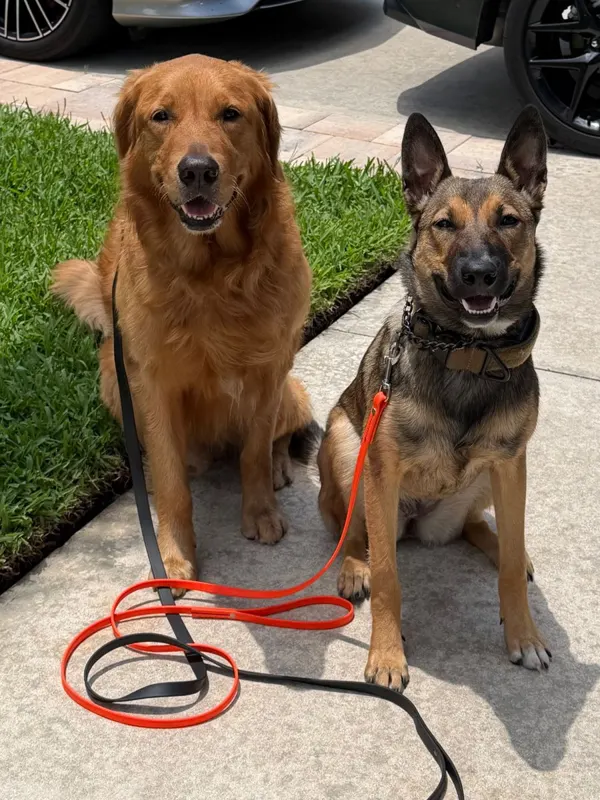
Confident but easygoing, quick to settle and relaxed around family, friends and noise.
Family protection dogs
Family protection dogs: how to find one that is safe at home
A family protection dog is a stable, social dog that is gentle at home and willing to protect on command. The right one gives a household an extra layer of security without turning the house into a bite risk. Tell K9PN about your family and we will refer you to a professional who places dogs for homes like yours.
- Free to request, takes about two minutes
- Calm with children and visitors
- K9PN refers you and does not sell dogs
Find a family protection dogTell us about your household, including children and other pets. Include your ZIP code so we can match you with a professional who serves your area.K9PN is a referral service and does not train dogs. By submitting a request you agree that K9PN and a participating trainer may contact you about it by phone, text or email. Message and data rates may apply. See our Privacy Policy.
Key takeaways
- A family protection dog must be stable, social and safe around children before anything else.
- Supervise all contact between dogs and children, whatever the training.
- Choose the lowest level of protection that meets your need.
What matters most
What makes a good family protection dog
Temperament matters more than breed, drive or looks.
The dog listens at home, on walks and around visitors, and has a reliable out and recall.
Proven or properly introduced to children and other pets of the ages and kinds you actually have.
Enough drive to protect, not so much that the dog is wired all day and hard to live with.
Hips, elbows and breed screening checked, because a painful dog is an unpredictable dog.
Daily exercise and training, supervision around children and a commitment to ongoing handling.
How K9PN works
A referral service, not a seller
What you can expect when you send a request.
K9PN does not breed, sell or train dogs. We pass your request to an experienced professional who serves your area.
Our guides list what to ask any seller or trainer: health tests, contracts, training and aftercare.
It costs nothing to send a request, and you decide whether to work with whoever contacts you.
By K9PN · Founded by Mike Leal, Army Ranger veteran and dog trainer · Reviewed October 2026
What is a family protection dog?
A family protection dog is a dog that lives as part of the household and is trained to alert, deter and protect the family when needed. Unlike a personal protection dog or a sport dog, it is selected first for temperament: calm, affectionate and reliable at home. Protection training is added on top, in a controlled way, and kept at a level that suits the household.
The result should look boring day to day. The dog greets guests when invited, ignores strangers on a walk and plays with the kids under supervision. It only changes when it matters and it switches back when told.
Are protection dogs safe with children?
They can be, but it depends on the dog and on you. A well-bred, properly socialized dog with a stable temperament can be a wonderful family member. A dog that is intense, anxious or under-exercised is not safe for a house with kids, whatever its training.
- Supervise always. Never leave any dog alone with young children.
- Teach the children. No pulling ears or tails, no cornering the dog, no disturbing it while it eats or rests.
- Be honest with the seller. Say how old your children are and how active your home is, so you get a dog that fits.
- Choose a dog with a family history. Ask whether the dog has lived with children, and meet it with yours present, calmly and under guidance.
Best breeds for a family protection dog
| Breed | Why families choose it | Watch for |
|---|---|---|
| German Shepherd | Trainable, loyal and versatile; widely available in a range of temperaments | Hip and elbow problems; needs structure and exercise |
| Rottweiler | Calm, confident guardian that bonds closely with its family | Strong and powerful; needs a confident owner and good socialization |
| Doberman | Affectionate, alert and eager to be with its people | Heart disease in the breed; can be sensitive |
| Belgian Malinois | Highly trainable and athletic | Very high drive; usually too much for a typical family home |
| Dutch Shepherd | Work-minded but biddable, with a good off switch in the right lines | High energy; needs a job |
Many families do best with a German Shepherd or Rottweiler from stable lines, and a Malinois only if they are experienced and active.
How family protection training works
Training starts with obedience and house manners, then adds alert and deter behaviors, such as barking on command and controlled responses to a threat, and protection work for dogs with the temperament for it. A good trainer builds it slowly and checks, at every stage, that the dog stays calm and social.
The handler lessons matter as much as the dog's. Family members need to know the commands, the rules and the limits. See protection dog training if you already own a dog and want to start training.
Questions to ask before you buy
- How does the dog behave around children, visitors and other pets? Can I see it with them?
- What is the dog's temperament, and what does it do when startled or stressed?
- What training does it have, who trained it and for how long?
- What health testing has been done, and can I see the paperwork?
- What handler training is included for me and my family?
- What are the return or exchange terms if the dog does not suit us?
Cost, insurance and responsibility
A family protection dog costs less than a personal protection dog but still a significant amount, plus ongoing food, veterinary care and training. Tell your insurer about the dog, because some exclude breeds like Rottweilers, Dobermans and German Shepherds, and make sure your household understands that you are responsible for everything the dog does. See the cost guide.
How K9PN matches you with a family protection dog professional
K9PN is not a marketplace where anyone can pay to be listed, and we do not sell dogs. We refer people to experienced, independent professionals and look at the things that decide whether a working dog turns out safe and reliable in real life:
- Real working-dog experience. How long they have trained or placed protection, sport or police-style dogs, and whether the person who trains your dog is the experienced one.
- Stability before bite work. Good programs start with a sound temperament, clean obedience and control, and only then add protection work. A dog that is only intense is not a protection dog, it is a liability.
- Transparency. You can see the dogs, the facility and the training, meet the parents or the dog's working history, and get a written contract.
- Handoff and support. Handler training for you and your family, and follow-up after the dog comes home. The dog is only half the system.
- Legal and insurance awareness. Honest advice about liability, local rules and what the dog is and is not trained to do.
Read our guide to buying a protection dog for the questions to ask any seller or trainer.
A note on the law and your responsibility
This page is general information, not legal, insurance or veterinary advice. Dog laws, breed rules and liability differ by state, county and city, and by your lease, HOA and insurer, so check them before you buy.
Common questions
What is the best family protection dog?
It depends on your household, but stable German Shepherds and Rottweilers are the most common. Doberman and Dutch Shepherd can also work well, and a Belgian Malinois usually suits only experienced, active homes. Temperament matters more than breed.
Can I have a protection dog with a young child?
Often, yes, with care. Choose a dog with a proven family temperament, supervise at all times and teach your child how to behave around the dog. Be upfront about your child's age so the professional can place a suitable dog.
Will a family protection dog be aggressive?
A well-bred, well-trained one will not be aggressive day to day. It is calm and social at home and protects only on command or in a clear threat. Aggression without cause is a sign of poor breeding or poor training.
How much does a family protection dog cost?
Less than a personal protection dog, but still a significant investment. Prices depend on the breed, training level and what is included. Ask for written quotes and compare what each includes, especially handler training.
Can I train my own dog as a family protection dog?
Some dogs have the temperament for it, but many do not, and protection training is not suitable for every dog. A professional should assess your dog first. See our protection dog training page for how to get started.
Do I need to keep a protection dog on a leash or in a fence?
Usually, yes. You are responsible for the dog in public, local leash laws apply, and a secure fence protects visitors and your insurance position. Ask your trainer for a plan.
Does K9PN sell or train protection dogs?
No. K9PN is a referral service and does not breed, sell or train dogs. We pass your request to a professional trainer or working-dog program that matches what you asked for and serves your area. It costs nothing to send a request, and you decide whether to work with whoever contacts you.
Related
- Protection dogs for sale
- Trained protection dogs
- Personal protection dogs
- German Shepherd protection dogs
- Rottweiler protection dogs
- Protection dog cost
- Protection dog training
Sources and further reading
For dog trainers
Do you train or place protection, sport or police K9 dogs?
K9PN refers people who are looking for a protection dog, protection training, sport dog training or K9 programs to professional trainers. We also build the website, CRM and follow-up that turn those enquiries into clients. Book a call to ask about availability in your area.
Types of dog training
Compare the types of dog training
Each format has its own page explaining how it works, who it suits and what to ask a trainer.
Board and train dog training
Your dog stays with a trainer for an intensive program, then you learn to keep the results going at home.
Private (1-on-1) dog trainingOne-to-one sessions built around your dog and your goals, at home or at the trainer.
Virtual dog trainingLive video coaching with a trainer, from wherever you are. Currently available in Florida.
Types of dog training comparedBoard and train, 1-on-1, virtual, group and day training side by side, and how to choose a trainer.
Ready to find a family protection dog?
Fill out the request form and a professional will contact you.
Find a protection dog